The increasing demand for compliance is reshaping how accounting firms function and deliver value. This article explains the importance of compliance in the accounting industry and the different types of compliance to regulate.
What Compliance Means in Accounting Today?
Compliance in accounting refers to adhering to financial regulations, industry standards, and legal requirements. It involves actively implementing processes, controls, and systems that ensure those rules are consistently followed. There are two key aspects of compliance:
- The standards that govern financial reporting and operations
- The actions taken by firms to meet those standards
In simple terms, compliance is both the rulebook and the discipline required to follow it.
Why Compliance Is Becoming Critical in Accounting?
The accounting industry is undergoing rapid change. New regulations, technological advancements, and global business operations are increasing the complexity of financial management. As a result, compliance is playing a bigger role than ever before.
1. Higher Client Expectations
Clients today expect accuracy, transparency, and reliability. Compliance ensures that financial data is trustworthy and meets professional standards.
2. Growing Risk of Financial Misconduct
With more digital transactions and complex financial systems, the risk of fraud and errors has increased. Strong compliance frameworks help detect and prevent such issues.
3. Reputation and Trust
In accounting, trust is everything. A single compliance failure can damage a firm’s reputation. On the other hand, strong compliance builds credibility and long-term client relationships.
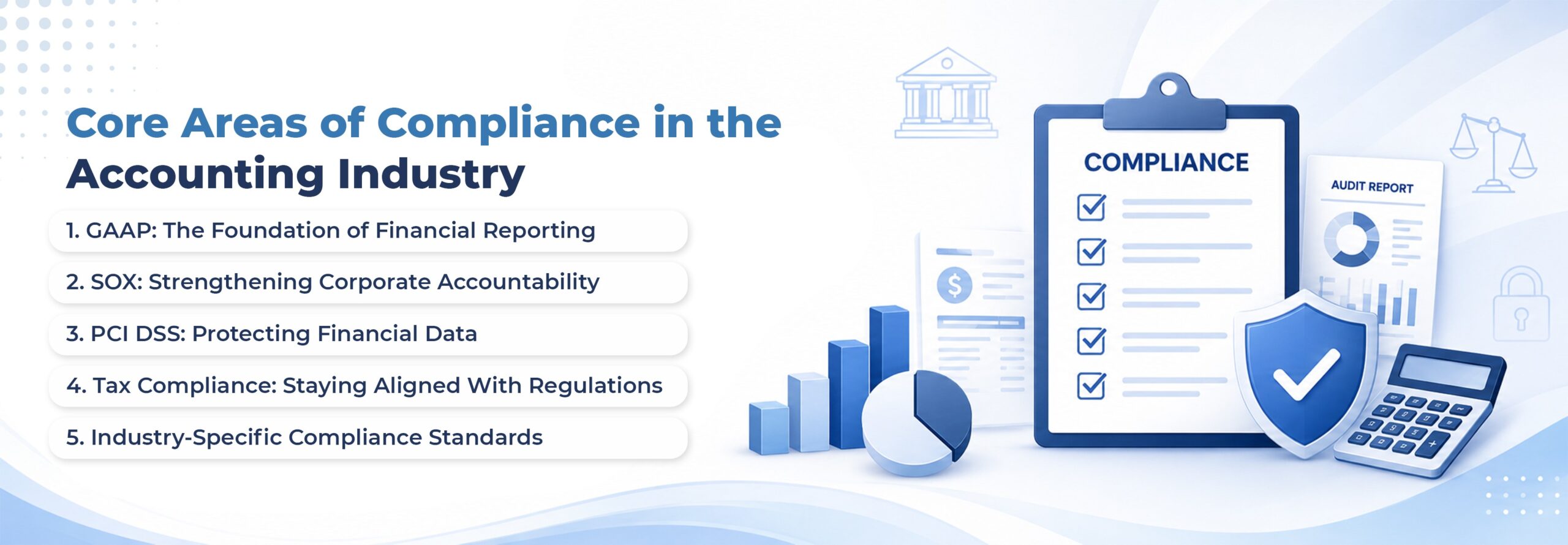
Core Areas of Compliance in the Accounting Industry
Accounting firms must navigate multiple compliance frameworks. Each plays a specific role in ensuring financial accuracy, security, and accountability.
1. GAAP: The Foundation of Financial Reporting
Generally Accepted Accounting Principles (GAAP) provide a standardized approach to financial reporting. These principles ensure consistency and comparability across financial statements. Main principles include:
- Separation of business and personal finances
- Recording transactions in a consistent currency
- Timely preparation of financial reports
- Accurate recording of costs and expenses
- Full disclosure of relevant financial information
- Matching expenses with related revenue
By following GAAP, accounting firms ensure that financial statements are reliable and free from manipulation.
2. SOX: Strengthening Corporate Accountability
The Sarbanes-Oxley Act (SOX) was introduced to improve corporate governance and restore investor confidence after major financial scandals. SOX focuses on:
- Strengthening internal controls
- Ensuring auditor independence
- Increasing accountability of senior management
- Enhancing financial disclosures
For accounting firms, SOX compliance means maintaining strict oversight and ensuring that financial reporting processes are transparent and accurate.
3. PCI DSS: Protecting Financial Data
With the rise of digital payments, protecting customer data has become critical. The Payment Card Industry Data Security Standard (PCI DSS) sets guidelines for safeguarding cardholder information. Key requirements include:
- Using secure systems and firewalls
- Implementing strong password protocols
- Encrypting sensitive data
- Regularly updating software and systems
- Training employees on data security
Failure to comply can result in fines, loss of payment processing capabilities, and reputational damage.
4. Tax Compliance: Staying Aligned With Regulations
Tax compliance is one of the most important responsibilities in accounting. It involves understanding and adhering to federal, state, and local tax laws. This includes:
- Filing accurate tax returns
- Meeting deadlines such as annual and quarterly filings
- Paying payroll, income, and sales taxes
- Maintaining proper documentation for deductions
Accurate tax compliance not only avoids penalties but also ensures smooth financial operations.
5. Industry-Specific Compliance Standards
Different industries have unique compliance requirements. Accounting firms must be aware of standards relevant to their clients. Examples include:
- AICPA standards for ethical accounting practices
- SEC regulations for companies in the securities market
- FASAB standards for government accounting
- DCAA requirements for defense contracts
- HIPAA regulations for healthcare-related financial data
Understanding these frameworks allows accountants to provide specialized and compliant services.
The Risks of Ignoring Compliance
Failing to prioritize compliance can have serious consequences for accounting firms and their clients. Some of the major risks include:
- Financial penalties and fines
- Legal actions and lawsuits
- Loss of business licenses
- Increased audit scrutiny
- Data breaches and security threats
- Damage to brand reputation
In many cases, the cost of non-compliance far outweighs the effort required to maintain proper standards.
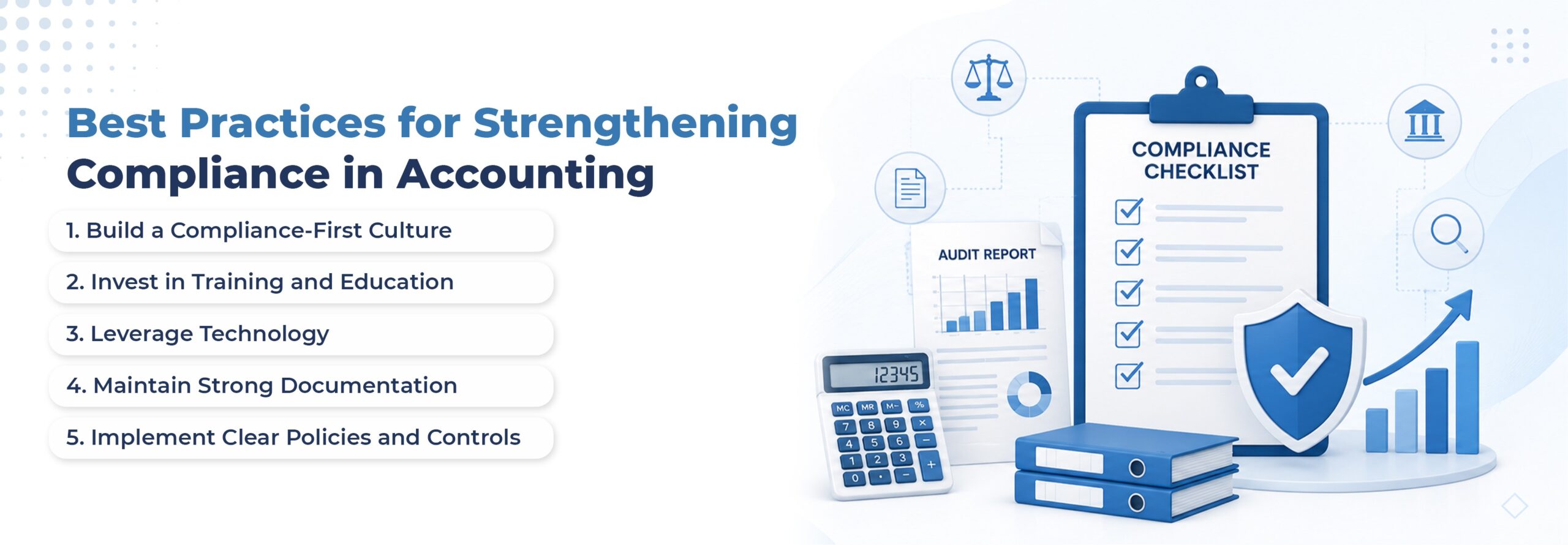
Best Practices for Strengthening Compliance in Accounting
To stay compliant in a complex regulatory environment, accounting firms need a proactive approach. Here are some effective strategies.
1. Build a Compliance-First Culture
Ensure that every team member understands the importance of compliance and follows established procedures.
2. Invest in Training and Education
Keep teams updated on the latest regulations and industry standards through continuous learning.
3. Leverage Technology
Modern accounting software and cloud-based systems help automate compliance processes and reduce manual errors.
4. Maintain Strong Documentation
Accurate and organized records are essential for audits and regulatory checks.
5. Implement Clear Policies and Controls
Define roles, responsibilities, and approval processes to ensure accountability.
The Future of Compliance in Accounting
Compliance will continue to evolve as regulations change and technology advances. Some key trends shaping the future include:
- Increased use of AI and automation in compliance processes
- Greater focus on data privacy and cybersecurity
- Expansion of global compliance standards
- Real-time reporting and monitoring requirements
Accounting firms that adapt to these changes will be better positioned to thrive in a competitive environment.
Summing Up
The growing importance of compliance in the accounting industry cannot be overstated. It is no longer just about following rules; it’s about building a reliable and trustworthy business.
Firms that prioritize compliance gain a competitive edge. More importantly, they position themselves as trusted advisors in an increasingly complex financial world. In a profession where accuracy and integrity define success, compliance has become the foundation.